Tuesday, October 16, 2012

BLIND

I haven't read a book in almost a year. I miss reading, but I just can't get myself in the mood to pick up reading again. It's a special kind of hell, I feel blinded, deafened and numbed. I'm not sure how long this state will last or if it won't pass at all, but when/if it does I'll try to write an update or actually something meaningful here - this is supposed to be a review blog after all. For the minor shifts you can still follow my Goodreads page. Oh, I'm not sure if Trin's ever to write reviews for this blog again, that's why the months of silence, since she was the only one who was active for the last few years.

I wish you many good reads until you hear from me again. Take care.

p.s. Kings of Morning by Kearney was a decent conclusion to the trilogy but I was far less impressed with Kearney's latest works than the majority of those who read and reviewed it. I still recommend that you read The Sea Beggars trilogy and what has been written before it first.

Christopher Priest is a beast (I'm a rhyming devil I know). It's hard for me to name an author that writes in such an imaginative and immersive fashion. The Islanders is a weird set of interconnected short stories. I missed out on a lot of it since it requires the reader to be familiar with Priest's previous works (some of them preceding The Islanders both thematically and story-wise), but there is still enough of powerful and deliciously mind-boggling moments for me to recommend reading, especially if you've read his previous works and liked them.

ThRiNiDiR

Friday, March 4, 2011

A Dance With Dragons


Is going to see the light of day on July 12. This is not a bullshit date (barring a tsunami or multiple tsunamis or so George says). Fans all over the world: you can but rejoice.

Until then, this should do the trick to keep your appetites whet.

And while you're at it, don't forget to order The Wise Man's Fear. The Name of the Winds is just that good.

Friday, April 30, 2010

Snippy Snippets: "The Separation" by Christoper Priest

-
"The Separation" by CHRISTOPER PRIEST is a prime example of great and mind-boggling alternative history fiction. You get caught up in a story narrated by two identical twins through their journals and a few external publications on the lives of the two. The story is about the lives of Jack (the bomber pilot) and Joe L. Sawyer (the pacifist ambulance driver) during the WWII England. They have a love-hate relationship and they are both in love with the same woman. The war and their personal differences separate them, but as we follow their journal entries and external ("objective") facts are introduced along the way via newspaper articles and other official publications, we realize that a lot of the information we picked up along the way really contradicts itself. Priest does not spoon-feed the reader with the right answers, but leaves you to juggle with your thoughts and come up with a reasonable explanation for what was really going on. The writing is superb as well. A great page-turner even though the book offers limited action. If you want a breezy read full of adventure this probably isn't it, but what it offers is high quality drama, a well-written and highly enjoyable prose (the red herrings and the conflicting facts are masterfully woven into the fable so they don't disrupt the flow of the novel at all), and a sharp mind to connect the dots at the end to come up with an answer for the factual discrepancies. A great, heartily recommended read! Somewhere in between 4/5 and 4.5/5.

- Thrinidir -

Sunday, November 22, 2009

Six feet under...and digging my way back out

-
So what have I been up to the last couple of months that I haven't been blogging? Nothing much really. I'm stuck in a rut and I'm slowly digging my way back out of the mire. Even though I've been procrastrinating on an exponential level I still haven't been completely idle where reading is concerned - I've been close enough to stone cold idle though - and while I don't have the drive or the energy to write full-blown reviews let me give you a quick recap of what I've read lately and what are my thoughts on the books.

After I've reviewed DAVID LUIS EDELMAN's "Infoquake", that was way back in June, I've tackled (for the 7th time now) the mind-boggling saga Malazan Book of the Fallen. "Reaper's Gale" is not the best book in the series, but it is still a substantial effort by the fantasy powerhouse that goes by the name STEVEN ERIKSON. I'm not going into the details, so if you are unfamiliar with the series you can go and catch up on some of the older reviews I've written ("Midnight Tides" is actually the opening review for this site; at that time I was still learning the ropes of how and what to write so it is most definitely too long and unfocused, but it went a lot of effort into writing it). "Reaper's Gale" is, in my opinion, a weaker work than the initial four novels, but feels tighter and more focused than both"Midnight Tides" and "The Bonehunters". Malazan Book of the Fallen definitely remains a hallmark of modern fantasy, and "Reaper's Gale" only solidifys this notion.

After the hefty Malazan novel I had a taste for something smaller in volume, but not necessarily lighter of content. I found what I was looking for with URSULA K. LeGUIN's "The Dispossessed". It's no secret that I'm a fan of her work. "The Left Hand of Darkness" was a terrific work of fiction and one of my favourite reads of all time and while I wasn't as enthused with "The Lathe of Heaven" -- another of her masterworks -- "The Disspossesed" reminded me of LeGUIN's lucid insights into the human condition and her brilliant characterization skills. The ending was lukewarm in comparison with the rest of the novel, but a very strong work of fiction on overall, totally deserving of the Masterwork title and all the awards it got back in the day. Highly recommended.

"Heroes Die" and "The Blade of Tyshalle" by MATTHEW WOODRING STOVER are certainly works of fiction that I shouldn't have postponed reading for so long. STOVER -- a close example to PAUL KEARNEY in this particular case -- is another gem of fantasy literature who deserves more widespread recognition (and audience). He has a devoted following among the genre fans, which comes as a no surprise to me, but his works never cut it as deep into the mainstream as have titles from some lesser authors. His Star Wars novels, namely "Traitor", "Shatterpoint" and "Revenge of the Sith", are considered among the best works that were written in this particular shared world, but again, author's renown usually rises and falls with the original work he writes...which brings us to THE ACTS OF CAINE. The Acts of Caine are, by this moment, an unfinished fantasy series that consist of the following novels: "Heroes Die" (1997), "Blade of Tyshalle" (2001) and "Caine Black Knife" (2005, Act of Atonement: Book One). Book Two of the Act of Atonement, "His Father's Fist", is forthcoming. There is a rumor of more books about Caine to be written and he has recently signed a deal to write a novelization of a popular "God of War" videogame (Kraitos, the character you play in the game, has Caine written on it forehead really), but I digress. Caine is Badass, period. Following Caine's story is an absolute joy ride, but what makes these books good aren't the inventively portrayed acts of distilled bone-crushing violence, but the fact that you care about Caine and what happens to him. STOVER is a smart writer and his characterization is quite on the spot. Where STOVER fails in "Heroes Die" is the pretty straightforward plot and the feeling that he could expand on the world-building (the ideas are good, but the author rarely deviates from the fast moving plot and Caine's story), which makes the book a bit "provincial". But all this doesn't lessen my opinion of the novel, since STOVER addresses all the shortcomings of book one in "Blade of Tyshalle" and disperses all the doubts I had that Acts of Caine won't meet the high expectations I had about them. Truly remarkable.

---

I have no idea what I'll read next, but I'll let myself be surprised and I hope I'll be able to write a review or two in the near future and brake this stupor I've gotten myself into. Until the next good book is read...

-

-
~ ThRiNiDiR ~

Wednesday, September 16, 2009

Richelle Mead - Thorn Queen (Book Review)


"THORN QUEEN" (Amazon: UK, US)
by RICHELLE MEAD
Format: Paperback, 480/384 pages
Publisher: Bantam Books / Zebra Books (August 2009)
-
-
About a year ago, I read and reviewed the first book of Dark Swan series, Storm Born, which came as a pleasant surprise. Naturally, I was excited to hear that the sequel was coming out this year and when I got the book, I started reading it as soon as I could find some time. Sadly, I have to say that it wasn't worth it.

The beginning once again introduces us to Eugenie's everyday (which I found pretty nice since I'd forgotten most of what has happened in the first book). This time around, Eugenie spends most of her days in Otherworld, since she is now the Thorn Queen there. Her country, being magical, has changed to suit her, but the inhabitants of Thorn Land have some hard time adapting to the climate changes. Eugenie is distraught and wants to help them, but by doing so, she has to put her talents to use, learn some more magic and decide on where her loyalties lie.

The plot is promising and pretty well-written, even if it seems that we've heard it all before. It's too bad that Mead doesn't leave it at that, but instead proceeds to throw in the element of paranormal romance – quite a lot of it. It seemed as if every chapter ended with a long scene of Eugenie and Kiyo having wild, rough sex. These love scenes are not even good, and after reading two or three of them, I simply started skipping them, because they were all the same. It was pretty annoying, not to mention being a really obvious filler for when Mead got out of ideas or simply wanted to prolong the book (without the sex scenes, it would've been shorter for at least a half) – I can't even say that she wanted to spice things up a bit, because it was all so utterly boring.

The humour, which I enjoyed quite a lot in the first book, has now faltered as well; in Thorn Queen, dialogues seem watered down and uninteresting. I admit I was under a lot of stress at the time of reading this book, so that might have influenced my views a bit, but I still think the fault lies mostly in Mead's writing. There was some lack of research on her part that did nothing to improve things – I could hardly laugh at Ladyxmara72 (a girl who met Eugenie in person and insisted on being addressed with her World of Warcraft character name), when I find it almost common knowledge that WoW characters can't have numbers in their names. It's a very silly, not to say sloppy mistake, but it destroyed that character for me, rendering her completely unconvincing. You can't submerge yourself into plot that way, not when such mistakes make you aware that the characters are just a product of an author that did not do her research well enough and don't, by any chance, resemble real people. And I always thought geeks were the easiest characters to write, because there are so many stereotypes about them that are actually true in plenty of cases. Meh.

Thorn Queen is a huge step backwards from what we've seen in Storm Born. The plot is all but put on the sidetrack and the whole book mostly revolves about Eugenie's sexual life, when it should be the other way around. Thus, Thorn Queen firmly sets itself into the sub-genre of paranormal romance, and will probably appeal to fans of Twilight and the like. Too bad, really – the plot had much potential, but has become more of an excuse for sex scenes.
-
 
-
-
~Trin~

Wednesday, June 24, 2009

Eye Candy Covers XI


-
-
BRANDON SANDERSON, if u haven't heard of him yet, is becoming one of the most recognisable names in the fantasy genre. His "Mistborn" trilogy garnered much praise from both readers and critics alike, as have his standalone novels "Elantris" and "Warbreaker". The latter was originally released under a Creative Commons non-commercial, non-derivative work license, but was recently (June 6 2009) re-realeased as a hardcopy by Tor Books. What this means is, while you can now buy a nifty hardcopy version of "Warbreaker" from a local bookstore, the rough version of the book is still available online for no fee at all. If the name BRANDON SANDERSON still doesn't ring a bell, he is the guy who will write the last three books of "The Wheel of Time" saga after the passing-away of ROBERT JORDAN. To deliver such a prominent franchise into the hands of a relative newbie is a great show of faith from the publisher, but you can be sure that their decision hasn't been incidental and I don't think we'll see a drop in quality. Quite the contrary actually. I think that SANDERSON will revitalize the series by infusing into it fresh ideas while remaining true to the spirit of JORDAN's original vision. The first of the three books, entitled "The Gathering Storm", has been completed and will see the light of day in early November 2009. The cover art for "The Gathering Storm" has been released and all I can say is that it is absolutely awful, maybe even a contender for this year's crappiest cover. Now, can you see the irony in this post? :)

The cover art I've posted above is going to adorn the first book in the UK edition of the "Mistborn" trilogy (US editions, both hardcover and paperback, were hit and miss as is to be expected by now) that was originally realeased in 2007 and 2008 by Tor Books. The cover art is stunning, if you appreciate the minimalist approach, as I do. If I could describe it with as little words as possible they would be something in the vein of: delicate, graceful, clean and unobtrusive to the senses. Good job.

Sunday, June 21, 2009

In the Limelight - The Winner of The David Gemmell Award for 2009 Announced

-
On April 12th the shortlist for the first DAVID GEMMELL LEGEND AWARD was announced and the final five nominees were as follows:
-

"Last Argument of Kings" by JOE ABERCROMBIE
"Heir to Sevenwaters" by JULIET MARILLIER
"The Hero of Ages" by BRANDON SANDERSON
"Blood of Elves" by ANDRZEJ SAPKOWSKI
"The Way of Shadows" by BRENT WEEKS
-
The award ceremony has taken place on June 19 in the Magic Circle in London and at the end of the night THE DAVID GEMMELL LEGEND AWARD went to:
-
"Blood of Elves" by ANDRZEJ SAPKOWSKI
-
Congratulations to the winner and condolences to the rest! I haven't yet read "Blood of the Elves", but if I could judge it by "The Last Wish" (SAPKOWSKI's first novel translated into English and reviewed here) then I'd say it was a strong candidate at the least. Now I have no excuse to delay reading it anymore.

Monday, June 8, 2009

James Enge - Blood of Ambrose (Book Review)


"Blood of Ambrose" (Amazon: UK, US)
by JAMES ENGE
Format: Paperback, 401 pages
Publisher: Pyr (April 21, 2005)
-
-
Like "Midwinter" by MATTHEW STURGES, "Blood of Ambrose" is a novel with a promising blurb and an appealing cover, but it took some time for me to convince myself to pick it up and start reading. Even then, I regarded the first few characters with skepticism: sure, they showed promise, but so did the opening chapters of "Midwinter" and look what those have lead to... Luckily, "Blood of Ambrose" is - among other things - much more coherent than Midwinter, and the opening chapters do not charm the reader in order to make up for a disappointment he will experience later, but rather lead him into a story about a child-king, growing up in a restless age of riots and uprisings.

John from Grasping for the Wind described the plot as "Lathmar's capture, rescue, recapture and rescue again", which correctly describes the gist of it, but there’s more to the story than just the adventures of the little King. "Blood of Ambrose" is an action-packed fantasy, which, despite seeming to revolve around the boy-king Lathmar, actually focuses more on Lathmar’s grown-up ‘assistants’ and his distant relatives: his ‘grandmother’ Ambrosia, her brother, the notorious Mordock, and his apprentice, who all fight Lathmar’s war in order to bring peace back to his kingdom. There is still a lot of focus on Lathmar’s adventures, though, which makes "Blood of Ambrose" a nice blend of YA and fantasy – the not-too-serious narrating tone prevents "Blood of Ambrose" to sound too bleak or ominous when regarding some of the graver events like the uprising of the ‘zombies’ and the painful past of the Ambrosii (i.e. Mordock and Ambrosia). At the same time, we get a pretty realistic picture of Lathmar as a boy: he hardly knows what the grown-ups are talking about half of the time, he has no special skills except for those which are more or less common in his family and his perception is, at times, rather naïve.

Some reviews claim that "Blood of Ambrose" lacks characterization, but I disagree. Sure, there is a lot of unused potential to the characters, but we get to know their main personality traits and since we view them mostly from Lathmar's perspective I think it's only logical that they all seem a bit mysterious and distant – after all, these are the basic attributes of an adult viewed from a child's perspective. There are also a lot of little tidbits of characters' pasts, which implies that we'll get to know them even better in the sequel, This Crooked Way (personally, I suspect that Mordock will appear there as the main character).

"Blood of Ambrose" has other problems, though – what I missed most was humour. There were some attempts at it, but I just didn't find them amusing enough. There were maybe two or three really humorous moments, but mostly, it just seemed as though there were a lot of little holes in the flow of narration or dialogue which should be filled with humour but were, for some reason, left empty.

At times, parts of the story are simply left unfinished, such as the part where Lathmar falls in love and then never mentions or remembers that again. What bothered me as well were the parts with Hope, who only appears a few times; her relationship with Ambrosia could use some more detail and overall complexity. Also, how come Morlock is still confused by the signature in her note to him, when he received a farewell from her just before that? Such small things make the book look unfinished, which is never good.

These flaws aside, "Blood of Ambrose" is still more than a decent debut with a nice, flowing style, intriguing characters and a unique idea. Its ending led me to expect that we'll see a great deal more of Ambrosii in the sequel, and I look forward to it.

---(4 out of five EvilFruitcakes)
-
-
~Trin~

Monday, June 1, 2009

Condensed&Appropriated BOOK RELEASES for JUNE 2009

-
Why condensed and appropriated? Because I shifted through the more extensive publication lists that were published elswhere (I wouldn't want to take credit for other people's work: The Deckled Edge, SFRevu.com, The Ostentatious Ogre and Fantasy Book Critic) and I appropriated them for my own needs; since I'm rather picky the list I'm making is also of a condensed nature :).

Without further ado, the books of June 2009 that look especially promising are:

  • "Best Served Cold" (June 1, 2009 UK) by JOE ABERCROMBIE
  • "The Angel's Game" (transl. June 1, 2009 UK and June 16, 2009 US) by CARLOS RUIZ ZAFÓN
  • "Nights of Villjamur" (June 12, 2009 UK) by MARK CHARAN NEWTON
  • "Retribution Falls" (June 18, 2009 UK) by CHRIS WOODING
  • "Naamah's Kiss" (June 24, 2009) by JACQUELINE CAREY
  • "Warbreaker" (June 9, 2009 US) by BRANDON SANDERSON

For the rest of the books being released in June 2009 follow the links above.

As for what you can expect from us in the next couple of weeks is Trin's review of "Blood of Ambrose" by James Enge, my review of "Infoquake" by David Luis Edelman and a new giveaway, so stay tuned...
-
-
~ Thrinidir ~

Monday, May 25, 2009

Carlos Ruiz Zafón - The Shadow of the Wind (Book Review)


"The Shadow of the Wind" (Amazon: UK, US)
by CARLOS RUIZ ZAFÓN
Format: Paperback, 544/487 pages
Publisher: Phoenix / Penguin (October 2005 / January 2005)
-
-

CARLOS RUIZ ZAFÓN was quite famous in his motherland Spain for his appealing YA literature even before he set his pen to write "The Shadow of the Wind" (which will, from now on, be referred to as "TSotW"). But it was "TSotW" that brought him international fame and recognition as one of the speculative fiction's most promising new authors (where 'new' is a relative term). Even though "TSotW" was written back in 2001 it took several years for the various translations to circle the globe and reach world-wide popularity and acclaim.

If we look at this novel at face value only, it's a pretty straightforward mystery/crime story set in Spain's lascivious metropolis Barcelona in one of it's more ominous periods - reign of fascism and general Franco. Our protagonist, a 10-year-old by the name of Daniel, discovers a spellbinding book and the more fascinated that he becomes with it, the more he prods into it's authors shady past, more dangerous, interwoven and jarring the discoveries and his everyday life become. But "TSotW" wouldn't be written by a Spaniard if it didn't include tinges of Mediterranean passion and love for life. But when you finish the book and think of it, this is so much more than a 'simple' mystery/crime story (which isn't all that simple to begin with), but a book about life itself and why it's worth living for - and what's worth dying for as well. So, like all great literature, "The Shadow of the Wind" transcends any simple genre labeling.

Telling you more about the story than I just did would be pointless and counterproductive to the message I'm trying to convey in this review, but let it be enough to say that the plot itself is as enigmatic, gripping and intense as one would want from a mystery/detective story. The pace - after a slow start - and suspension of disbelief are handled with the guile of a master storyteller for the better part of the novel as well.

Characters are, for the most part, complex and multi-layered, but also most vivid and sympathetic. ZAFÓN is prone to caricature his characters (i.e. representing them in a mildly exaggerated manner for the purpose of comic relief from the otherwise often bleak and dreary content). If there was a specific character in the novel, beside the main protagonist Daniel, that I'd want to expose, it would definitely be Fermin, once secret agent and now homeless person who played for the wrong side and attracted an unwanted attention from a certain vicious police inspector. His musings and dialogues are really an accomplishment of smart writing. ZAFÓN's history as a writer of YA literature is most clearly evident with how he approaches and handles his characters and this is one of the biggest appeals of "TSotW"; characters of this novel stir up the reader in a profound way, they bring out the awe, youth and innocence in us, and it's simply priceless.

If I had any grievances with the book they would be that the start is somewhat slow and that I didn't always like how Zafon handled the relationship between Daniel and his father. Well, when I think on it, quite a few families we meet in "TSotW" are portrayed as at least mildly, if not severely, dysfunctional and estranged, but with Daniel and his father it feels like there is a void in narration; the reader expects some kind of shift, closure or...something, but it never comes. But other than that, "The Shadow of the Wind" is a terrific example of how powerful - as in meaningful, smart and moving - can a scribbled slab of dead wood be. May ZAFÓN's fate never reflect that of Julian Carax*.

----(4,5/5 Fruitcakes)
- -
- Thrinidir -

* Julián Carax - The alleged author of "The Shadow of the Wind". Daniel desperately seeks to find out the truth about this mysterious man: the reasons for his journeys, the truth about his childhood, and the explanation for why his books are all being destroyed.

p.s. Definitely the best book I've read in the last year and a half (rivalled only by the brilliant "Flowers of Algernon" by Daniel Keyes - reviewed by Trin).

Wednesday, May 13, 2009

Frank Beddor - The Looking Glass Wars (Book Review)


"Looking Glass Wars" (Amazon: UK / US)
by FRANK BEDDOR
Format: Paperback, 384 / 400 pages
Publisher: Egmont Books Ltd. / Puffin (May 2005 / August 2007)
-
-
Princess Alyss Heart’s life turns upside down when her vicious Aunt Redd beheads Alyss' mother and begins to rule over Wonderland with an iron fist. Alyss escapes from Wonderland and is exiled to Victorian London, where she is adopted into a new family, renamed Alice, and befriended by Lewis Carroll. Wonderland never leaves her mind, though, and at age 20 she returns to Wonderland in wish to overthrow Redd.

~~~

Wonderland is real, folks. Carroll enthusiast, proceed to jump with glee. Someone--somewhere--has stepped forward, once again shedding the light on the classic adventure of a girl who stumbles upon a bustling rabbit and a strange little world. I, being one of the Wonderland-junkies, had to pick it up and make sure Carroll’s legacy was being kept properly.

Too bad that Looking Glass Wars was not much to my liking.

Not that it wasn’t an enjoyable read. It was. I read it in one sitting, almost entirely immersed in this vicious new Wonderland, where only the disloyal and heartless survive. I was incredibly impressed with Mr. BEDDOR’s imagination with the whole thing. He took a children’s book with roughly drawn characters and turned it into this maniacal world with armies and palaces … I could even go as far to say that he has created an entirely new world. The idea of turning the Cheshire Cat into a Cat assassin with nine lives was brilliant. The Mad Hatter has become a loyal but deadly guard for Queen Genevieve (aka the White Queen) and her daughter, Alyss Heart. The Red Queen/Queen of Hearts is, of course, the sinister Redd, and the wise scholar Bibwit Harte (an anagram for White Rabbit) is the royal tutor.

I’m not good at summaries in the least, so I’ll just get to the point: it was okay. Not marvelous, not terrible. Simple okay. The setting is fantastic, unbelievably creative, with such an amazing twist on everything. This might have, however, been the downfall of the whole thing.

It seems like the author spent SO MUCH DAMN TIME coming up with the setting, twisting these characters into generals and queens and princesses, that he forgot about the rest. It feels like he spent too much time exploring one scene, then remembered he had a plot to follow and rushed it through so he could quickly get to the next part. When I read books, the first thing I look for is a connection to the characters. Am I rooting for him/her? Am I invested in their life? Do I want them to win? I did not find any of this with Alyss Heart.
Looking Glas Wars is narrated in a cold, detached third person point of view, and the author separated the moment she fell into Victorian London and thirteen years later when she returns to Wonderland with a single paragraph. There is no time for the reader to relate to Alyss, or even to get to know her well.
First she’s seven and running around with a group of homeless orphans. The next moment she‘s ten and put in an orphanage. In a nick of time, she’s eleven and adopted and trying to push aside her Wonderland memories. Finally, she’s twenty and all of a sudden a powerful queen. I really wouldn’t mind reading an extra two hundred pages or so as long as there would be more insight, perspective and details. It would have been interesting to see how she adjusts to this new, drab world. She comes from Wonderland, a place full of color and imagination and strange creatures, to one of the bleakest places of the Victorian era, where women are meant to stay in their place and imagination is near-sin. There is a prince who proposes to her, their relationship is described in five paragraphs, tops, and when they’re about to get married, she’s suddenly back in Wonderland with little to no transitions explaining this.
She mentions that she loves the Liddels, who raised her, but she hardly even describes them or the rest of the family whatsoever. The only one she describes at length is Mrs. Liddel, and what she has to say about her is not really positive. How am I supposed to cares for these people when she left them without a thought, replacing herself with a figurative clone she created of herself (using imagination, which has obviously become a kind of superpower). There is no indication that she misses them, even though they were raising her since she was ten, or that she missed Wonderland during the time of her exile. Upon her return, everyone greets each other with quick, cold mutterings that hardly reflect the fact that none of them have seen each other for most of Alyss’ life.

Honestly, I could go on like this all day, but then my rating would make no sense. Despite the plot being rushed and detached from the characters, the setting was really imaginative and made "Looking Glass Wars" quite fun to read. "Looking Glass Wars" has brisk pace with a lot of action sequences, and some of the characters - such as Jack of Diamonds - are just hilarious to read about. While this may not be enough to overlook the sloppily written plot, it does make "Looking Glass Wars" an enjoyable light read.


-
-
~ Dannie ~

Thursday, May 7, 2009

Michael Moorcock - The Stealer of Souls (Free Fiction)


-
-
MICHAEL MOORCOCK is a legend of science fiction and fantasy. Period. Despite the fact that he has written quite a few distinguished literary novels (he never dedicated himself fully to fantasy or science fiction) he is nevertheless most known for his recurrent creation of the the Eternal Champion, where "Elric of Melniboné" and his adventures represent only one part of the Multiverse, but they are undoubtedly his most popular works to date. Elric is an anti-hero (he is the actual prototype for the anti-hero characters that came after him) written as a deliberate reversal of what Moorcock saw as clichés commonly found in fantasy adventure novels at that time (think Lord of the Rings or Conan).

In 2008, Del Rey Books reprinted the original, classic Elric material as a series of three illustrated books: "The Stealer of Souls", "To Rescue Tanelorn", and "The Sleeping Sorceress". Subsequent volumes appearing in 2009 (Duke Elric and Elric in the Dream Realms) and 2010 will reprint later material.

And now, "The Stealer of Souls" (the first reprinted book), is available for free and you can download it via following links: Download, Kindle, Sony Reader, Scribd.com


And if you are interested in synopsis:
When Michael Moorcock began chronicling the adventures of the albino sorcerer Elric, last king of decadent Melniboné, and his sentient vampiric sword, Stormbringer, he set out to create a new kind of fantasy adventure, one that broke with tradition and reflected a more up-to-date sophistication of theme and style. The result was a bold and unique hero’”weak in body, subtle in mind, dependent on drugs for the vitality to sustain himself’”with great crimes behind him and a greater destiny ahead: a rock-and-roll antihero who would channel all the violent excesses of the sixties into one enduring archetype.

Now, with a major film in development, here is the first volume of a dazzling collection of stories containing the seminal appearances of Elric and lavishly illustrated by award-winning artist John Picacio’”plus essays, letters, maps, and other material. Adventures include ‘The Dreaming City,’ ‘While the Gods Laugh,’ ‘Kings in Darkness,’ ‘Dead God’s Homecoming,’ ‘Black Sword’s Brothers,’ and ‘Sad Giant’s Shield.’

An indispensable addition to any fantasy collection, Elric: The Stealer of Souls is an unmatched introduction to a brilliant writer and his most famous’”or infamous’”creation.

Monday, April 20, 2009

Matthew Sturges - Midwinter (Book Review)


"Midwinter" (Amazon: UK, US)
by MATHEW STURGES
Format: Paperback, 345 pages
Publisher: Prometheus Books / Pyr (March 2006)
-
-
You probably know how it is when a book's cover looks so great and its summary sounds so intriguing that you want to adore it straight away, without even reading it. In fact, you could almost say you're afraid to read such a book because you don't want to get disillusioned. I felt like that when I got "Midwinter" in the mail – but to my relief, when I finally dared to open it, I found out that its beginning was great.

The opening scene shows us directly into a prison brawl, where we meet two of the main characters; a warrior called Mauritane and the mysterious Raieve. There is no introduction to the world in which the story takes place or to the events that lead to either one’s imprisonment, which is one of the reasons why the beginning is so gripping and intriguing. When the plot became quest-oriented soon after the opening chapters, I was not disheartened – even though there is a danger of getting trapped into the usual cliché of quest-oriented fantasy (the great hero goes on a quest, saves the world and gets the girl), there are still really great books with quest-based plots. I was also charmed by the amount of humour present (you can find an example at the beginning of SQT’s review) and I often laughed out loud while reading. Plus, there were curious little tidbits of mystery: different worlds, the strange Gifts and re energy of the elves, Mauritane and Purane-Es’ past … The first third of "Midwinter" showed great potential – honestly, I was certain that it could get better than, say, one of the Abercrombie’s books.

The problem is that all the initial potential went more or less to waste. In fact, the book deteriorates so much after the first third that the reader wonders whether STURGES simply got lucky with the beginning. First signs that the story has started to go wrong appear soon enough: on about one third of the novel, more and more of the details don’t get explained, and the adventurers are revealed to bear the most typical roles of adventuring party members:
  • a near-omnipotent, loyal and honourable leader
  • a mysterious elven woman who is, depending on situation, either a cold-blooded fighter or a damsel in distress
  • a wizard whose sole point in life seems to be chasing young women
  • a human physicist who serves as the clumsy, confused provider of comic relief and
  • a few elves, who seem to be there only because STURGES felt that not all of the party members should survive but couldn’t spare any of the important ones.
Other characters are, sadly, none the better. Hy Pezho is your typical frustrated villain who abhors the fact that he is of no interest to women and wants to achieve greatness in order to finally win the hearts of the court ladies. The two Queens of the opposing sides appear to be little less than statues when it comes to their character – we don’t even get to know why exactly our party of ‘good guys’ follows one and not the other, since the only vague reason we get is somewhere along the lines of ‘ well, we’re used to being loyal’. Lady Anne is one of the rare brighter spots here and the only character who isn’t strictly black or white; she is shunned by society because of her noble husband’s imprisonment and must choose between loyalty and social life. Purane Es is half mindless, vengeful jerk and half romantic poet who is forced to obey his father’s wishes. My almost-extinguished hopes rose when Purane-Es decided to win Lady Anne for himself and delivered the ‘you’re so special, I’ve never felt like this before’ speech – I was delighted with how evil, cunning and convincing he was. Imagine my disappointment when I found out that he was, in fact, being honest.

At that moment, I put "Midwinter" down for a week. I can’t describe how disappointed I felt – I kept hoping that all those little mysteries will be solved, that the questions will get answered and things like Gifts will get explained, but as I neared the ending, I saw that this was not the case. When I finally decided to pick "Midwinter" up again, I saw that it would be better if I left it unread – the conclusion is the lowest point of the book, not because it were badly written but because it is the end of all hopes that Midwinter’s potential will be put to good use. The party almost trips over the quest’s objective, but we still don’t get to know what good the quest actually was. The aforementioned Gifts and re energy are only mentioned once or twice after the beginning, the humour is completely gone after the first third and it is painfully obvious that things like Silverdun‘s transformation and the human settlement subplot were meant to have a purpose which was then lost in the process.

This might sound a little harsh, but I was reminded of the time when I was 14 and trying to write a ‘book’. I had lots and lots of ideas (not terribly innovative ones, but still), but I just piled them all up and then filled the holes with random stuff. When I look at that text now, I see a few good ideas, some unused potential and a lot of useless junk. "Midwinter" is pretty similar in that aspect – piled up ideas, lots of fillers and a potential to be something much, much better. For now, though, "Midwinter" is more of a raw draft than anything else, and will leave a bad taste, regardless of how good the sequels are, but they can push the trilogy onto an average level and maybe even past that if they return to the style of Midwinter’s first third. If it weren’t for the latter, "Midwinter" would be a total waste of time.
-
-
-
~ Trin ~

Tuesday, April 14, 2009

The David Gemmell Award 2009 (shortlist)

-
On April 12th the shortlist for the first DAVID GEMMELL LEGEND AWARD has been announced and the final five in alphabetical (bold) order are as follows:
-

"Last Argument of Kings" by JOE ABERCROMBIE
"Heir to Sevenwaters" by JULIET MARILLIER
"The Hero of Ages" by BRANDON SANDERSON
"Blood of Elves" by ANDRZEJ SAPKOWSKI
"The Way of Shadows" by BRENT WEEKS
-
Congratulations to all the nominees! I've only read the first book so my (partial) vote lies with LAoK; I've heard a lot of good stuff about Sanderson (Mistborn is sitting by me pleading to be read), Sapkowski (The Witcher was brilliant) and Weeks though...nothing about Marillier, but I don't doubt the book deserves recognition. So, where lies your vote?
-

Hugo Nominees 2009: Free Reading

-
Asimov's Science Fiction has made available all of their Hugo and Nebula award nominees for 2009 as a free read up on their website.

-

HUGO

Novellas

"The Erdmann Nexus" by NANCY KRESS
"Truth" by ROBERT REED

Novelette
"Alastair Baffle's Emporium of Wonders" by MIKE RESNICK
"The Ray-Gun: A Love Story" by JAMES ALAN GARDNER
"Shoggoths in Bloom" by ELIZABETH BEAR

Short Story
"26 Monkeys, Also the Abyss", by KIJ JOHNSON
"From Babel's Fall'n Glory We Fled", by MICHAEL SWANWICK

NEBULA

Novelette
"The Ray-Gun: A Love Story" by JAMES ALAN GARDNER
"Dark Rooms" by LISA GOLDSTEIN

Short Story
"26 Monkeys, Also the Abyss", by KIJ JOHNSON
"Don't Stop" by JAMES PATRIK KELLY
-
I'd like to thank Joe Sherry From Adventures in Reading for the heads up.

EDIT: Thanks to MentatJack for directing me to his Hugo tracking post, where he offers quite a few more links to free online versions of Hugo nominees ("Little Brother" by Cory Doctorow, all of the nominees for Best Novellete as well the nominees for Short Story and almost all the nominees for Best Novella). Good stuff.

~ Thrinidir ~

Wednesday, April 8, 2009

The ULTIMATE (and somewhat bloated) Best Of 2008 List: Recap & Conclusion

-
Finally, here is the absolute "Ultimate Best Of 2008 List"! I perused every single article in this ongoing series of articles we've been posting over the last couple of months [links: part 1, part 2, part 3, part 4, part 5, part 6 & The RoSF List] and the linked sites that were referred to in each subsequent article, including the huge database of various 'best of' lists over at FANTASY BOOK CRITIC (link). Here I've compiled a list that's made up from all the books that were mentioned at least 6 (5) times (on different lists, of course, and regardless of the ranking, if the list in question happened to rank the books in any manner); also worth mentioning is that this is technically not a real 'best of' list, but more of a 'most popular' books list, since - among other things - some of the lists sorted the books from best to worst and others listed them in no particular order, making it very hard to determine the absolute winner of 2008. What is more, the books we've taken into account weren't necessarily released in 2008, they just had to be read last year. The books with the same number of mentions are listed in alphabetical order and are as follows.
-
---------
-
1. Last Argument of Kings [review: 1, 2] – JOE ABERCROMBIE, 2008 (12 mentions)
Little BrotherCORY DOCTOROW, 2008 (12 mentions)
3. The Graveyard BookNEIL GAIMAN, 2008 (11 mentions)
4. AnathemNEAL STEPHENSON, 2008 (1o mentions)
5. The Name of the Wind [review coming soon] – PATRICK ROTHFUSS, 2007 (9 mentions)
6. The House of SunsALASTAIR REYNOLDS, 2008 (7 mentions)
The Shadow of the Wind [review coming soon] - CARLOS RUIZ ZAFON, 2001/2004 (translation) (7 mentions)
The Ten Thousand [Review] – PAUL KEARNEY, 2008 (7 mentions)
Thunderer [review coming soon] – FELIX GILMAN, 2008 (7 mentions)
The Terror [Review] – DAN SIMMONS, 2007 (7 mentions)
Toll the Hounds STEVEN ERIKSON, 2008 (7 mentions)
12. Caine Black KnifeMATTHEW W. STOVER, 2008 (6 mentions)
Pump Six and Other Stories (short story collection) – PAOLO BACIGALUPI, 2008 (6 mentions)
The Drowned Life (short story collection) – JEFFREY FORD, 2008 (6 mentions)
The Painted Man [Review] – PETER V. BRETT, 2008 (6 mentions)
The Steel Remains [review coming soon] – RICHARD MORGAN, 2008 (6 mentions)
-
A bit of STATISTICS for interlude: there were 518 different sf&f books mentioned in all the lists we used in our survey, but only 142 of those were mentioned more than once and only 74 were mentioned more than twice. Another interesting fact: while a lot of these ‘Best of 2008’ lists were not limited to books that were published in 2008, these books still prevail on overall.

What about the RUNNER-UPS? There are 10 books who missed the top of the chart by only one mention - and they're all just as (some even more in my opinion) interesting as the top tier:
-
17. Implied Spaces – WALTER JON WILLIAMS, 2008 (5 mentions)
Lavinia – URSULA K. LE GUIN, 2008 (5 mentions)
Matter – IAIN M. BANKS, 2008 (5 mentions)
Old Man's War [Review] – JOHN SCALZI, 2005 (5 mentions)
The Alchemy Of Stone – EKATARINA SEDIA, 2008 (5 mentions)
The Dragons of Babel – MICHAEL SWANWICK, 2008 (5 mentions)
The Engine's Child – HOLLY PHILLIPS, 2008 (5 mentions)
The Gone-Away World – NICK HARKAWAY, 2008 (5 mentions)
The Red Wolf Conspiracy [Review] – ROBERT V.S. REDICK, 2008 (5 mentions)
Wastelands: Stories of the Apocalypse (anthology) – ed. JOHN JOSEPH ADAMS, 2007 (5 mentions)
Congratulations to all the books that made it on this list (and to the ones that were left out by a small margin as well). There is not much to say really, since most of the books you see listed here have been getting a lot of attention (with a few exceptions) on the blogosphere and other relevant genre sites in the past year. Although this list reflects POPULARITY of books before anything else, it is still somewhat an indicator of the QUALITY of these books. We read only a handful of the titles listed above and we have the intention to correct this mistake in the future, but from what we've read we can agree with the pick in most cases. We're not going to write an opinion for each of the books and whether they deserve to be on the list or not, but I'd like to hear what the rest of you think...is there a book that is missing on this list, but should be there? Or maybe one of the most popular books you see here doesn't deserve to be nearly as popular as it appears to be here? All in all, we've put much work into making this list and I hope it will give you at least a small insight into what went on in science fiction and fantasy genre in the past year.
-
-
Trin & Thrinidir

Monday, March 30, 2009

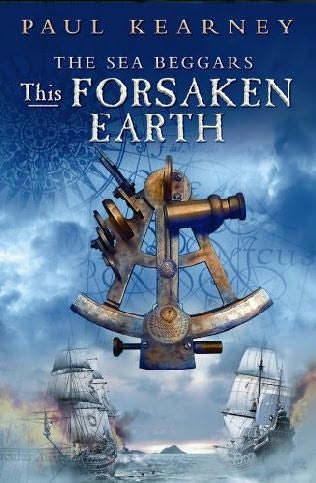
Paul Kearney - This Forsaken Earth (Book Review)


"This Forsaken Earth" (Amazon: UK, US)
by PAUL KEARNEY
Format: Paperback,
368/336 pages
Publisher: Bantam Press/Spectra (July/November 2006)

-
-
KEARNEY needs no introduction on RoSF, as we have already given him a lot of attention; I reviewed a couple of his books: (1) “The Mark of Ran”, the first book of The Sea Beggars trilogy (2) and “The Ten Thousand”, a heroic tale of a highly organised mercenary army and its epic journey through a hostile empire. “This Forsaken Earth” picks up where “The Mark of Ran” left off - with Rol Corthishane running from himself and his past to live as a ruthless but loyal pirate captain. While this book cleverly eschews some of the pitfalls of the middle-book syndrome it is in other ways still deeply trapped by those same dangers: the most obvious one is how the story, which was sublimely set up in “The Mark of Ran”, develops but little.

But if the plot progression disappoints to an extent, the reading experience itself is still as emotionally mesmerising as was with the previous book, if not more so. The novel doesn't resolve any of the questions raised in the first novel, it even raises some new ones, but while both the story and the main protagonist stagnate, author nevertheless manages to put a few hints here and there that he has something great in store for the reader in the final book of the trilogy, which is yet to be released (hopefully by the end of this year).

Cortishane and his motley crew of followers are flawed and morally ambiguous, but feel real and are likeable. Sadly, Cortishane's most trusted sidekicks lack a bit of character development, but I guess it's hard to fully flesh out a plethora of characters, if you write in such a condensed way as KEARNEY does (this is even more prominent in “The Ten Thousand”, his latest book). I still believe that the author has excellent skills for characterisation, but he intentionally (or unintentionally) chooses not to put it to the forefront of his novels. The bits of story that are character - not plot - driven are brilliant; I especially enjoyed how he handled the interaction between Rol and Rowen, Rol's lost love, when they happen to meet again. If anything, she is a true femme fatale, a woman I could find my self falling for. She is cold, haunting, distant, but scarred and also caring in her own way.

The world wherein the story transpires is lush and mysterious, but again, it remains largely unexploited (and unexplored). One third of the story takes place in the hidden pirate city that we were introduced to in the first book, another part of the story takes place in the war-riven state of Bionar, which was presented all to sketchy for my tastes, and the final part of the story unfolds in a bleak, wintry setting of a certain mountain ridge that Rol and the people that follow his lead have to pass to escape prosecution. To be honest, I enjoyed the first book's setting more, even if it was more static (and small-scale) compared to how this book's story resonates with the surroundings; I'm referring to the large household that was run by a charismatic and vile master, ruled by protocol and riven with hidden chambers (this was freshened up sporadically with Corthishan's forays into the city beyond). But I think I'm straying from the point here.

If I summarize my impressions of “This Forsaken Earth”: I must say, that despite all the niggles I had, the book remained a compulsive read throughout, KEARNEY's storytelling abilities are as sharp as ever and his style leaves the impression of being intentionally brash, simple, primordial and uncompromising at times. I wouldn't say that this book impressed me as much as I wanted it too do, but it certainly has some brilliant moments and is, generally speaking, a work of quality that I can nothing but recommend.
-
-
-
-
~ Thrinidir ~

Monday, March 23, 2009

The ULTIMATE (and somewhat bloated) Best Of 2008 List [part 7] - THE RoSF LIST

-

And now, finally - and also long overdue - Realms of Speculative Fiction Best of 2008. The only guidelines we followed while making this list were (1) that the books had to be read (but not necessarily published) somewhere in between January 2008 and March 2009 (2) and that most of the books comprising the list have to be genre related (the terms sf, fantasy and horror were perceived in the broadest sense possible). TRIN, MADWAND & THRINIDIR started regurgitating the books we read in the past year and you can find out which books we thought were more special than others from here on; let's start with Trin's reading highlights of 2008...
-
TRIN: I've already listed some of my favourite books of 2008 in Thea and Anna's Smugglivus post, but as soon as that list was posted, I realised I forgot to include some of the other books I've read last year as well. So, here goes: the full list of my favourite books of 2008, in alphabetical order.

Ender's Game (1985) by ORSON SCOTT CARD: I enjoyed this one greatly, but sadly never wrote a review for it (though I plan to do that after a re-read). It's one of the classics of the SF genre, but I didn't even know it existed until last year. The funny thing is that despite my love for this book, I don't plan to read any of the following instalments, at least not in the near future. Probably because I doubt they can get any better than Ender's Game.

Flowers For Algernon (1966) by DANIEL KEYES - Another classic! (In fact, about half of this list is made of classics … I'm slowly discovering some great things that others read ages before. I blame it on not being from US/UK.) Also, one of the first reviews I wrote. I suspect it'll stay one of my all time favourites, because it's one of the best books I've ever read.

Heroes Die (1998) by MATTHEW WOODRING STOVER – I'd never have thought that such a great book can hide behind such a funny cover. I can't get the second installment anywhere, though, since it's out of print, and I'm not going to read the third one without reading the second one first, so I'm kinda stuck. I also don't want the e-book (what good is an e-book without an e-book reader? True, I could spend some extra hours at the computer screen, but that doesn't sound very appealing to me) – as someone said: I need a dead tree in my hands when I read. Sorry, trees.

I Am Legend (1954) by RICHARD MATHESON – A classic again, and one of the rare 'horror' books we've reviewed on RoSF (I don't really think it a horror book, but I can hardly call it sf or fantasy …). I find it funny that at the time of reading it, I was perfectly sure that it was written in the 90s and kept asking myself why doesn't he use some technology. Hah! Also, I didn't watch the movie – I mean, they failed at choosing the main character (Neville from the book has pale skin, blue eyes and blond hair), so I didn't want to know at what else they've managed to fail.

It (1986) by STEPHEN KING – I don't know if this one should be called a classic, but it surely is a notorious book. I guess it's a sort of book that you love or hate, and I'm clearly on the former side. One of my little pleasures is creeping out people who only watched the TV series and think they know what "It" is about. Did that with Thrinidir and he swore that he's never going to read this book. Awww. :(

Orphan's Tales
(2006, 2007) by CATHERYNNE M. VALENTE – Finally, a book (two of them actually; Book One: In the Night Garden and Book Two: In the Cities of Coin and Spice) that's pretty fresh! It's a criss-cross between a fairytale storybook and 1001 nights (which could also be called a storybook, I suppose), written in a very poetical language. Very nice.


Otherland (1996-2001) by TAD WILLIAMS – This series has been sitting on Thrinidir's bookshelf for quite some time, but it never seemed really interesting to me. Thrinidir, however, insisted that I should read it, and I finally did so in the last days of 2008. I'm glad that he insisted.
- - - -
The Name of the Wind (2007) by PATRICK ROTHFUSS – Still trying to write a review of this one. It's one of the best fantasy books I've read lately, and I'm eagerly awaiting the next installment.-
-
-
-
-
The Road (2007) by CORMACK McCARTHY – I can't believe I almost forgot to include that one. Another one of my beloved post-apocalyptic books with a sociological note and a beautiful story. I can't wait to see what the movie will look like.

The Steel Remains (2008) by RICHARD MORGAN – An actual 2008 book :) I loved every part of it – the realism, the explicit language that went with it, the characters, everything. A thought: there can hardly be any strange slash fanfic written for this one.
-
-
The Terror (2007) by DAN SIMMONS – I've read Hyperion and Fall of Hyperion before this one, but it's The Terror that made me a real fan of Simmons'. The only book I've read and re-read in 2008.

Wasp Factory (1984) by IAIN BANKS – Not sure if this is speculative fiction at all, but I nevertheless loved it. I can't explain what's so great about a book where almost everyone is obviously crazy, though, but Banks is one hell of a writer who managed to successfully pull the whole thing off.
--------------------------------------------------------------------------------------
----------------------
MADWAND: Even though I managed to read only a few books in 2008, there was one that stood out; Scott Lynch's The Lies of Locke Lamora (2006). I should thank Thrinidir for having been such a pest [Thrinidir: "Oh rlly?"]: he has continuously badgered me about this book until I caved in and finally read it.
Locke is a young thief whose talent is recognized and nurtured by a con artist, Chains. A man with a vision, Chains moulds Locke and the other orphans he took under his tutelage into a group of confidence tricksters feared by the wealthy nobility. But then the plot thickens... :) Lynch did manage to spoil the experience near the end, but the overall impression was a very positive one. How can one not like a well written tale of charismatic con artists set in a fastastic rendition of Venice?
-
THRINIDIR: I don't read as much as some of the people I know and I'm not as genre knowledgeable as others, so I wouldn't take my year's pick as a definite indicator of sublime quality or some other serious referential pointl (i.e. I'm not saying that the books I'll be highliting represent the actual top of the crop), but I'm doing this in hope that people will be able to find at least a few noteworthy suggestions to add on their reading list.
-
-
Last Argument of Kings (2008) by JOE ABERCROMBIE. Though I was slightly less satisfied with the final volume of the superb "The First Law Trilogy" (Blindman was even more disgruntled by it) than with its two predecessors, especially "Before They Are Hanged", I still highly value Abercrombies' satirical wit, feel for characterization and utter disregard for what the endings should be like by the genre standards. This trilogy is definitely one of the highlights of the new millennium.
- - - - -
The Painted Man (2008) by PETER V. BRETT. While I called this book light-weight and suffused with genre staples it is still one of the best - if not the best - fantasy debuts of 2008. This is book one of the "Demon Trilogy" and its main purpose is to set up the world and introduce the main protagonists, but here this is not that much of a problem, since the characterization is sublime and a few innovative elements are thrown into the mix with the genre archetypes. This is a traditional fantasy, but it feels modern without the explicit content that a lot of authors abuse to try and make their book distinguished from the genre classics (and the dross).
- - -
The Shadow of the Wind (2001) by CARLOS RUIZ ZAFÓN. I'm in the process of writing a review for this monster of a book. What defines it as a monster isn't its length or even the inclusion of horror elements, but the richness of the prose and chock-full of thematic content and references. This is a book about life, but carefully hidden behind a mystery story that unfurles in the fascist Spain under general Franco. While not a fantasy, horror or science fiction book in the strictest sense of the word, it is still one of the finest books I've had the privilege to read in the past recent years. Highly recommended.
- - -
Chronicles of the Black Company (the original novels were published in 1984,1984 and 1985; the omnibus was published in 2007) by GLEN COOK. In a recent review of the "Black Company" books that I've came across the author of the article refers to these books as a "...revered ancestor that should be honored as well as awarded a significant place in the history of the genre, but they shouldn't be (re)visited often, because while they left their mark on the genre, they have been outlived and outperformed by its successors." While I agree with this estimation to an extent, I was nevertheless left more appreciative (as opposed to the author of this review) of the Black Company and Glen Cook when I finished this terrific omnibus. While the Black Company books might be labeled as sort of an revered ancestor, I still think that they should be visited at least once, by anyone who loves down-in-the-trenches first person narrative, charismatic protagonist or simply put - great fantasy.
-
The Road (2006) by CORMAC McCARTHY. The most evocative and touching book I've read in ages. Somber, moody, oppressive and primal, but never falling into the pit of pathetic. This is the book you need to read as soon you can. You really mustn't miss the sad journey of one father and his son following the road to nowhere in a fictional post apocalyptic world. Simply brilliant.
- - - - - - -
The Mark of Ran (2004) by PAUL KEARNEY. Paul Kearney, who? I've never heard of this author before I've started following online book reviews; Adam from The Wertzone referred to Paul Kearney as one of the most under appreciated fantasy authors out there and every since I've decided to read "The Mark of Ran", book one of The Sea Beggars trilogy, I have to agree. After this book I've read two more of his titles ("This Forsaken Earth" and "The Ten Thousand") and each of them is marked by the distinctive quality of Kearneys writing. He is a master storyteller who knows how to weave a tale and I promise you, when you'll pick up a book signed by Kearney - if you haven't already - you will be everything but disappointed.
- -
Flowers for Algernon (1966) by DANIEL KEYES. If I'd have to pick a favourite book I read last year, it would arguably be this one. "Flowers for Algernon" is Daniel Keyes' opus magnum that won the Nebula for Best Novel (with Babel-17) in the year that it was published. This is, technically speaking, a diary of a man who undergoes a surgical procedure that allows him to slowly progress from a state of idiocy to become nothing less than a genius and then gradually regresses to his previous state. The author shows tremendous insight into the human condition and has a knack for making you care for the protagonist. This is an ingenious work of fiction, you just have to be smart enough to pick it up.

~~~

I promise that the next article in the series (part 8, if I counted right) will be the last one; we only need to tally up all the books people refered to as special in 2008 and give you the final numbers (i.e. the books that were mentioned on the most lists).


blogger templates 3 columns | Make Money Online